The Adjustment Tax
There are few better places to observe adjustment than Mumbai’s suburban local-train network — the city’s famously crowded commuter railway, known simply as the Mumbai Local.
Space is negotiated. Bags move. Bodies shift. A seat designed for three accommodates four. Someone makes room because someone else needs it. The system works partly because the people inside it continually compensate for its constraints.
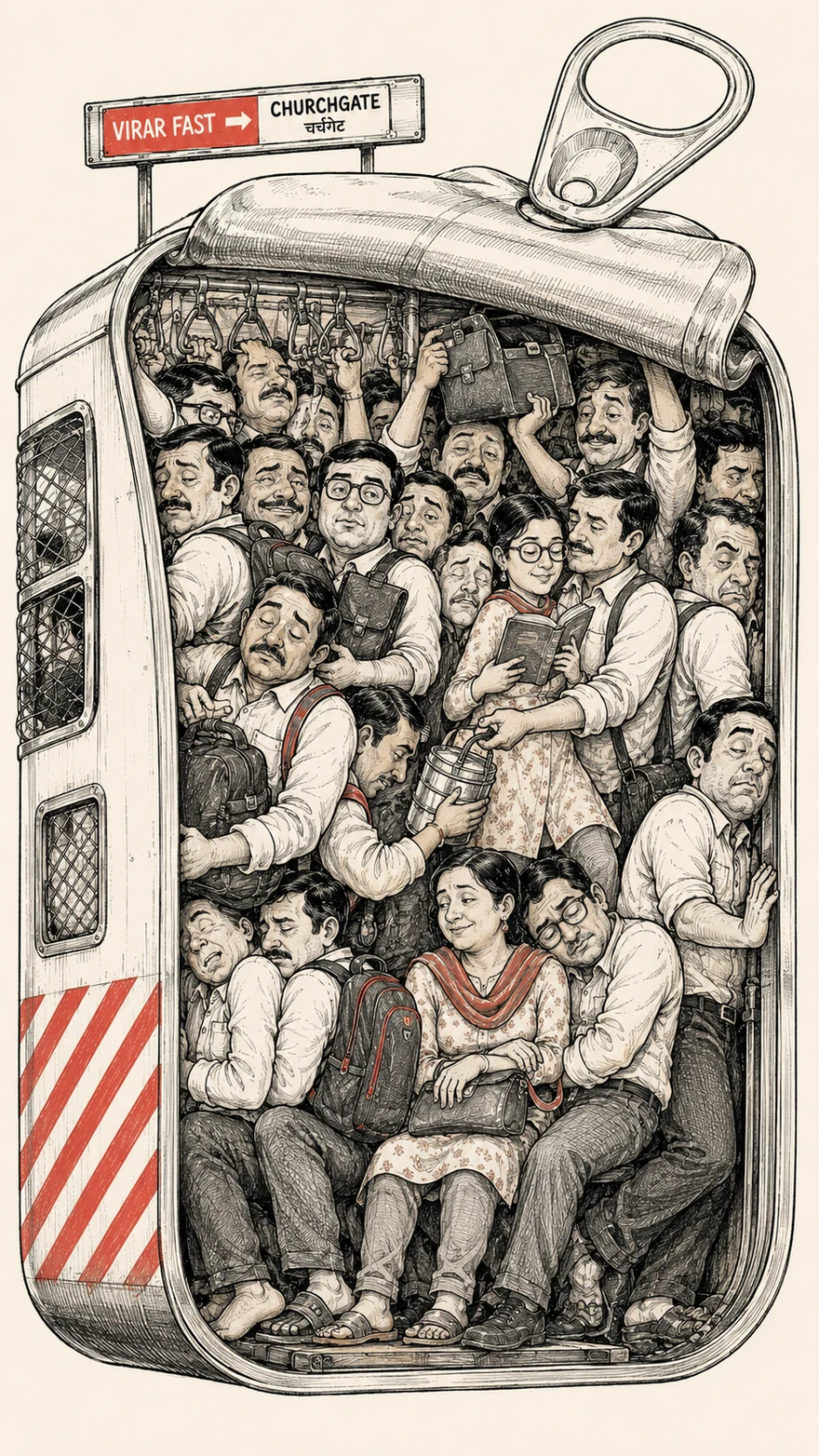
It is an impressive social operating system. It is also a dangerous lesson for businesses to learn badly.
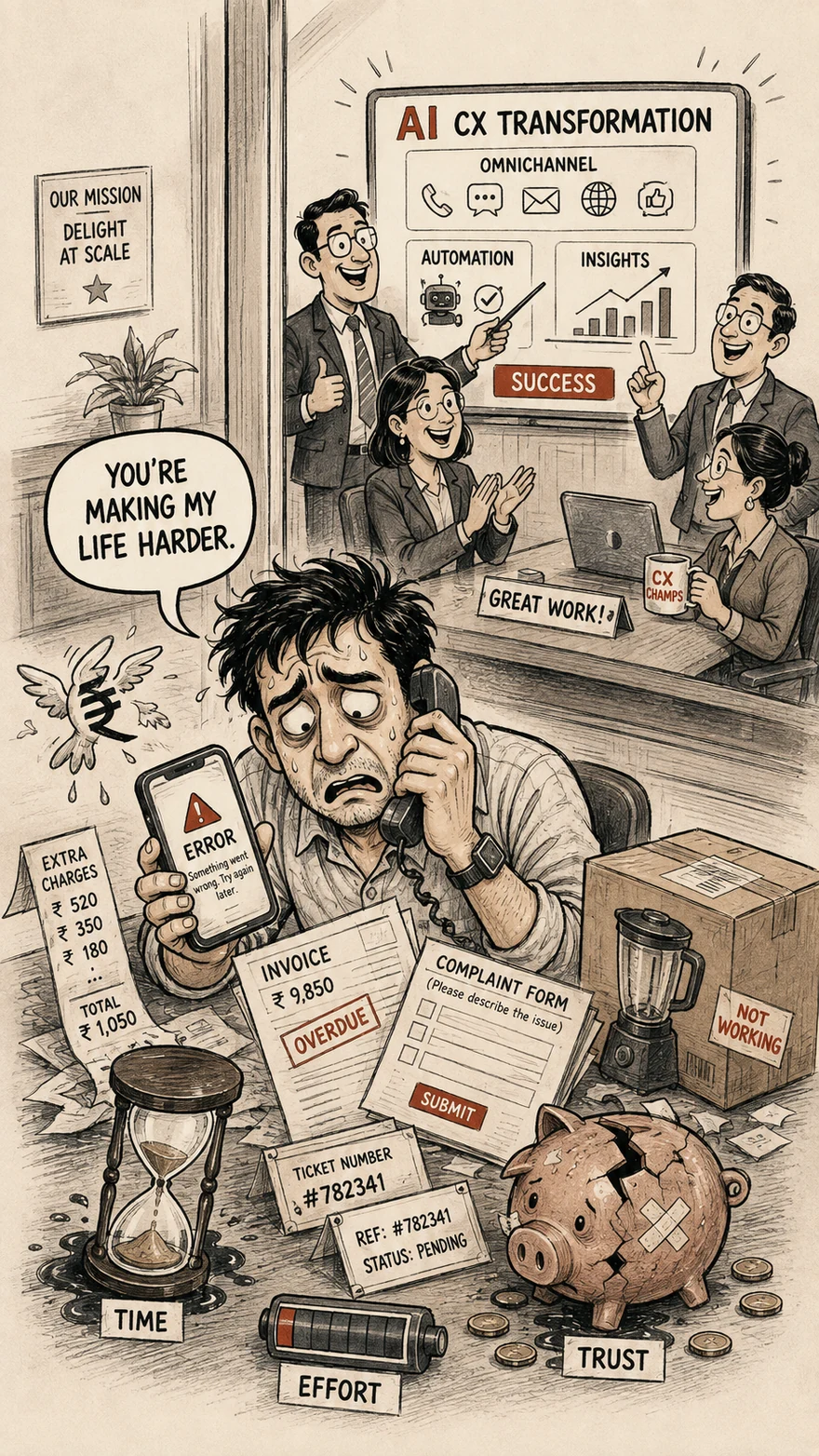
Indian consumers are very good at adjusting. We find workarounds, make another call, explain the problem again, visit another branch, send another email, re-enter information, pay cash when an app fails and discover the unofficial method of making an official process work.
The business has not necessarily solved the problem. The customer has solved around it.
And every time that happens, part of the cost of running the system has quietly moved from the company to the customer.
That cost is the Adjustment Tax.
The invisible invoice
Not every customer cost appears on an invoice. Some are paid in time, others in effort, attention or uncertainty. Eventually, some are paid in trust.
ServiceNow’s 2026 India customer-experience research offers a useful measure of the gap between what customers experience and what businesses believe they are delivering. The India study covered 5,705 people across consumers, customer-service professionals and business leaders.
The important finding is not simply that customers encounter friction. It is how differently customers and companies perceive the same friction.
Among customers, 53% identified unclear explanations of processes and policies as a major frustration. Only 22% of business leaders regarded it as a significant problem. The gap was similarly wide on lack of empathy, at 48% versus 19%; being transferred between departments, at 45% versus 23%; and having to repeat information, at 37% versus 25%.
This is more than a service problem. It is a reality gap.
The company sees a functioning process. The customer experiences the labour required to make that process function.
ServiceNow separately estimated that Indians lose an average of 10.8 hours a year resolving service-related problems. It also found that 44% of customers would consider switching brands after a poor service experience.
Those hours rarely appear on a customer-experience dashboard, but the customer still pays them.
Loyal. Or just stuck?
This creates a second problem: businesses are very good at measuring behaviour, but behaviour does not always reveal motivation.
Repeat purchase, renewals, active users and retention can all look reassuring. Yet a customer may stay because switching is inconvenient, competitors are no better, their data is already trapped in the system, cancelling is difficult, or reconstructing the arrangement elsewhere feels like even more work.
That is not necessarily loyalty. Sometimes it is inertia with a CRM record.
The distinction matters because loyalty and entrapment can produce the same retention number while creating entirely different relationships.
Loyalty says: I choose you.
Being stuck says: leaving you currently costs me more than tolerating you.
Only one of those creates goodwill.
When friction becomes part of the model
Some customer friction is accidental. Legacy systems do not communicate properly, departments operate in silos, processes accumulate exceptions and technology gets layered over old technology until nobody can explain why a particular step still exists.
But there is a more uncomfortable category: friction that is commercially convenient.
Signing up may take one click while leaving takes six. Buying is prominent while complaining requires excavation. A subscription can be started instantly but cancelled only after navigating menus, retention offers and confirmation screens.
Each inconvenience can be defended as minor. Together, they transfer effort.
The organisation has made its own process cheaper, simpler or more commercially favourable partly by making the customer work harder.
The danger is that customer adaptability conceals the cost. A customer who finds a workaround can still be recorded as a successful transaction: the payment was completed, the product was delivered and the ticket was closed.
Operationally, everything worked.
Experientially, it may have worked only because the customer did.
The longer argument is at the centre of the latest OhTBK episode, India’s Silent Adjustment Tax | Thoda Adjust Kar Lo? The film uses Mumbai’s suburban railway as a compressed lens on a wider business problem: what happens when customer adaptability starts doing work the system should have done itself.
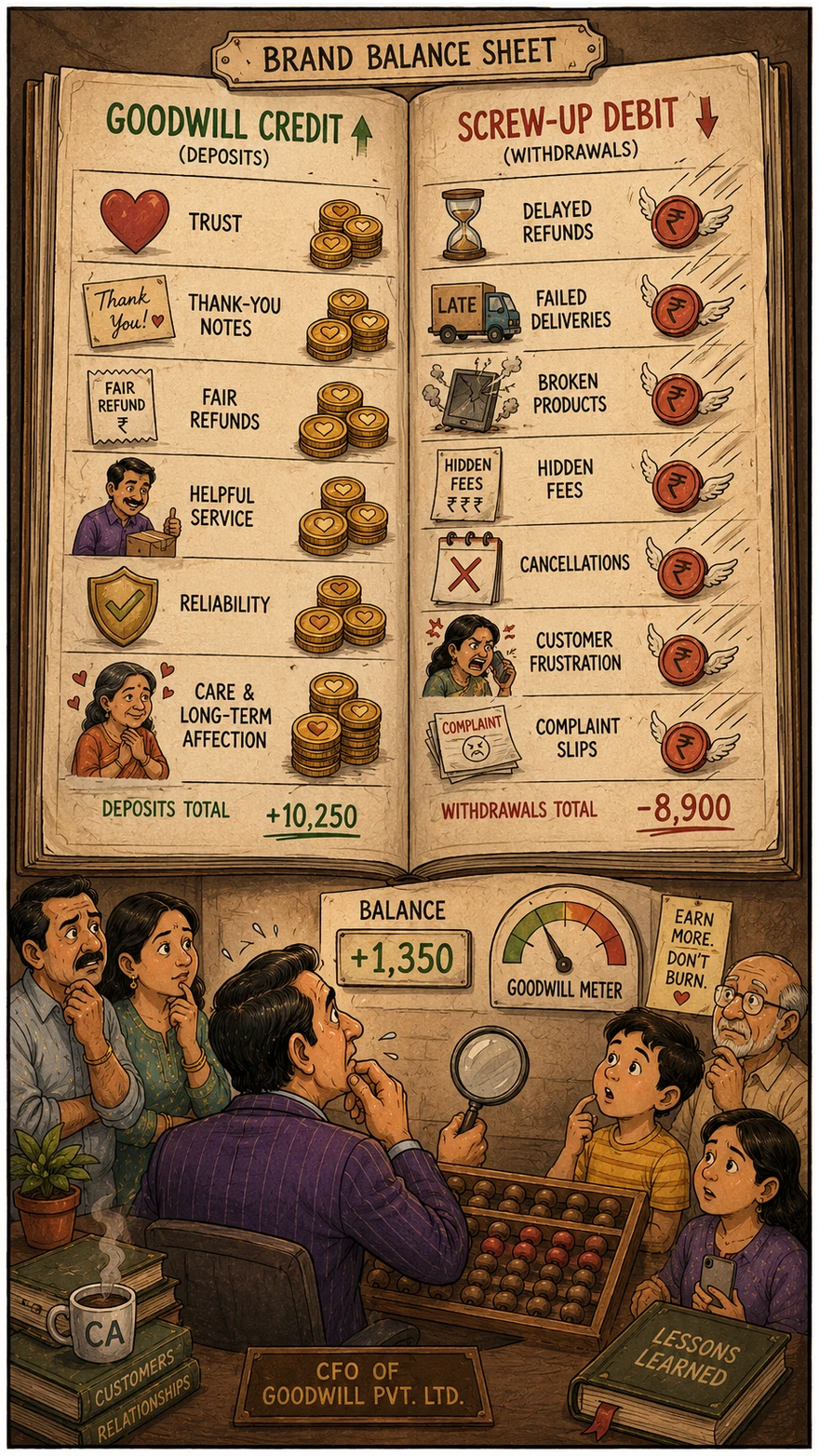
The goodwill account
Adjustment itself is not the problem. All relationships contain some adjustment. Customers forgive mistakes, wait, compromise and often give companies surprisingly generous opportunities to recover.
But adjustment becomes easier to ask for when a company has already earned something in return.
Cadbury India discovered this during its 2003 worm-contamination crisis. Its response went beyond advertising. Through Project Vishwas, the company addressed packaging, distribution and retail storage practices before using Amitabh Bachchan as the public face of reassurance.
The useful lesson is not that celebrity endorsement repairs trust. It is that goodwill gives a business something extraordinarily valuable: the opportunity to be forgiven.
Customers will tolerate the occasional failure from companies they trust. They may accommodate inconvenience, give the business time to recover and even help it along the way.
But there is a difference between earning adjustment and extracting it.
One draws on goodwill. The other creates an Adjustment Tax.
Flip the value equation
Customer-experience conversations have traditionally focused on the value a business can extract from a customer: lifetime value, share of wallet, retention, frequency and conversion.
Perhaps one more measure deserves to sit beside them:
How much unnecessary work does the customer have to perform in order to remain our customer?
Not because every inconvenience can be eliminated, but because every workaround contains information. Repeated calls, unnecessary transfers and unofficial fixes are all signals that effort has been displaced from the organisation onto the customer.
A customer who has learned the unofficial method of getting an official process to work is telling the organisation exactly where the system is failing.
The Mumbai Local works because people constantly adjust for one another. That is cooperation.
A business that depends on customers constantly adjusting for its systems is doing something else.
So yes.
Thoda adjust kar lenge.
But first, earn the goodwill.