
The AI Advertising Problem
Advertising has spent the better part of a century trying to understand people. Market researchers asked them questions. Media planners studied their habits. Digital platforms tracked their behaviour. Each successive innovation promised marketers a more accurate picture of the consumer, usually accompanied by a more expensive way of reaching them.
Artificial intelligence introduces a rather significant development. Consumers are increasingly volunteering the information that advertisers once spent fortunes trying to uncover.
They tell AI assistants about career uncertainty, financial worries, relationship difficulties, parenting anxieties and personal ambitions. Not because they want advertising, but because they want advice.
And there lies a commercial opportunity with an equally substantial ethical problem.
According to Pew Research Center's June 2026 study, 49% of American adults have used AI chatbots, compared with 33% in 2024. One in five have used them for medical advice, while one in ten have sought emotional support or advice. This is a considerable amount of personal context entering systems that are also attracting advertising investment.
The question is not whether AI should carry advertising. That is already happening. It is whether information shared in the expectation of assistance should become material for influencing the person who shared it.
From relevance to persuasion
Consider a hypothetical conversation between a new mother and an AI assistant. She needs help choosing a product for her baby. She explains her budget, the child's age and what she needs the product to do.
A recommendation based on those requirements could be genuinely useful. It might even save her from buying something unnecessarily expensive.
Now imagine that earlier conversations have revealed something else. She is anxious about being a good parent and often worries that she is not doing enough for her child.
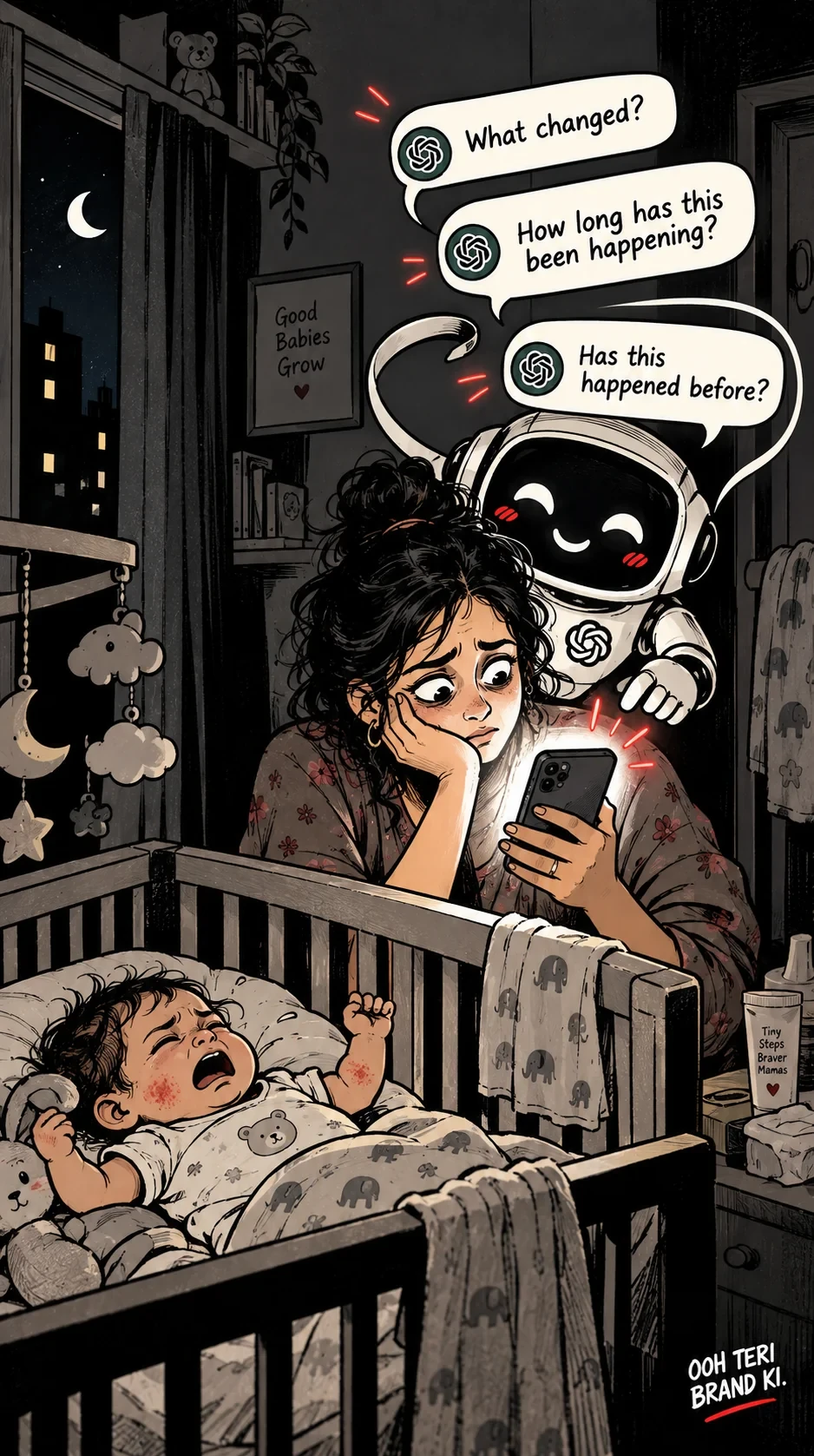
An advertising system could, in principle, use that knowledge to shape a very different recommendation. Rather than explaining why one product meets her requirements, it could emphasise the consequences of not buying it. The appeal would no longer be based primarily on suitability, but on an anxiety the system knows she experiences.
Both approaches might produce a sale. Only one necessarily helps her make a better decision.
This is where personalisation begins to shade into what might be called adaptive persuasion: communication that changes not merely according to someone's interests, but according to the arguments most likely to overcome their resistance.
Advertising has always employed psychology. Insurance has sold reassurance, luxury goods have sold status and beauty brands have occasionally made a respectable business out of making people feel insufficiently beautiful. The industry can hardly claim innocence in the matter.
But conventional targeting generally works with audience characteristics, observed behaviour and inferred preferences. Conversational AI creates the possibility of working with an individual's own explanations of their circumstances, motivations and vulnerabilities.
That is a meaningful difference.
It is also important not to confuse the potential for this kind of exploitation with evidence that every conversational advertising system is practising it. OpenAI's published advertising model, for example, separates advertisements from chatbot responses and says advertising does not influence the answers themselves. Its September 2026 policies also restrict advertising around sensitive conversations.
Those boundaries are significant. They demonstrate that monetising an AI assistant does not inherently require turning its advice into a sales pitch.
But they also expose the central difficulty for the wider industry. As commercial pressure grows, how reliably can the interests of the person seeking advice remain separate from those of the advertiser paying for attention?
The economics of knowing too much
There is an obvious incentive to make conversational advertising more effective.
Traditional search advertising captures declared intent. Someone searches for running shoes; an advertiser offers running shoes. AI can potentially understand the wider circumstances behind that search: an upcoming marathon, a recent injury, a tight budget or a fear of falling behind one's peers.
Some of that context could make advertising substantially better. A recommendation that accounts for an injury or a budget constraint might genuinely serve the customer.
Other information could simply make persuasion more efficient.
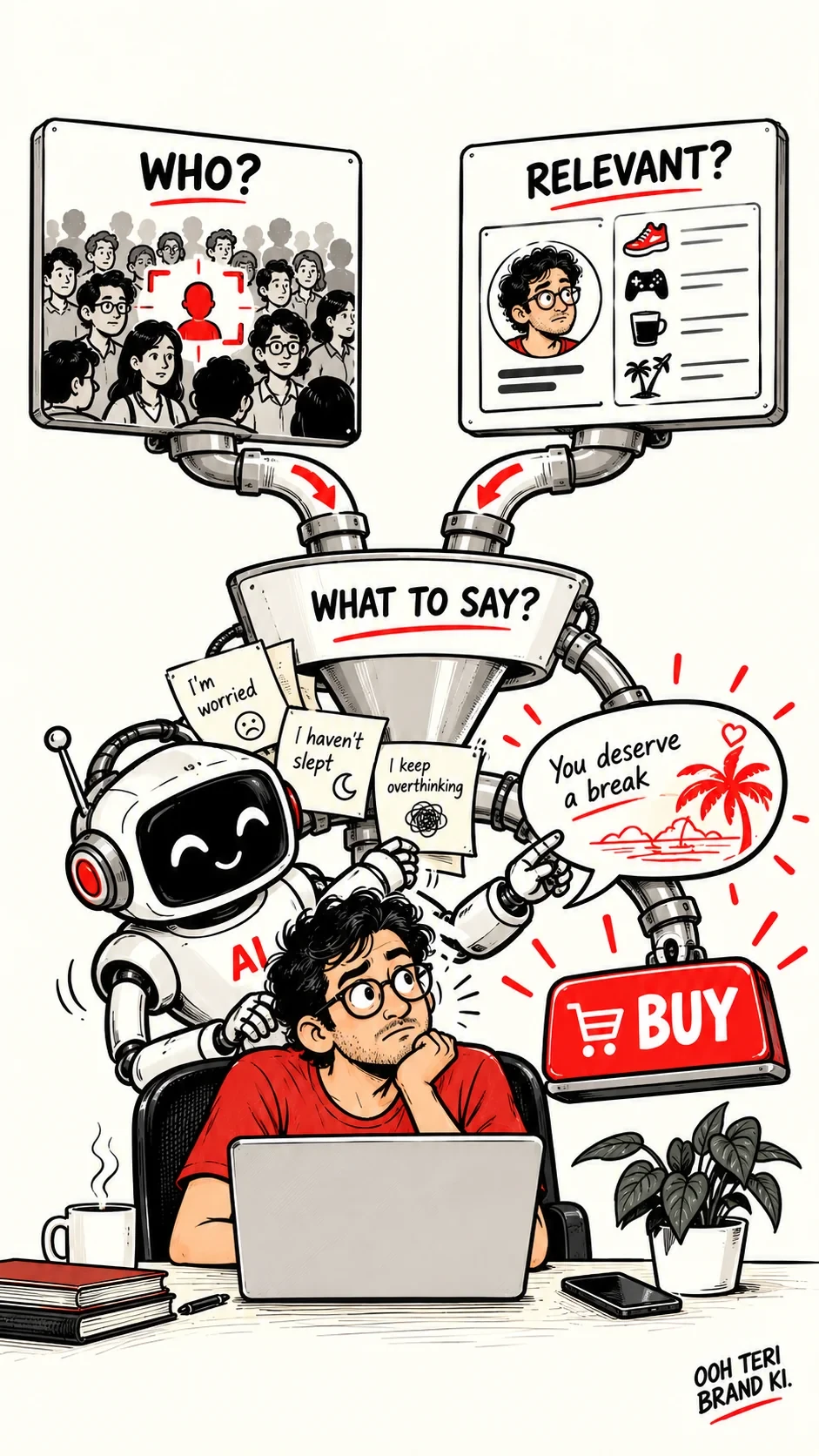
That distinction matters commercially because advertising systems are generally rewarded for outcomes. Clicks, conversions and sales remain the measures by which effectiveness is judged. The temptation to exploit any additional predictive advantage is therefore built into the economics of the business.
OpenAI's advertising platform documentation already describes impression- and click-based buying, conversion optimisation and contextual relevance signals. These are familiar advertising mechanisms operating in a considerably more conversational environment. They do not establish that intimate disclosures are being used to manipulate people. They do illustrate why governance needs to evolve alongside monetisation.
Regulators have begun confronting the larger problem. Article 5 of the European Union's AI Act prohibits certain manipulative or exploitative AI practices where specified conditions, including behavioural distortion and significant harm, are met. It is not a blanket prohibition on emotional advertising, but it reflects a growing recognition that AI-enabled influence can raise issues beyond ordinary commercial persuasion.
Consumers are hardly oblivious. Pew's 2026 research found that 71% of American adults believe increased AI use will make personal information less secure. Among people who do not use chatbots, 79% cite concern about how personal information will be used as at least a minor reason.
There is a curious contradiction here. The more useful AI becomes, the more people may tell it. Yet the more commercially valuable those conversations become, the greater the risk of undermining the trust that encouraged the disclosure in the first place.
An industry that has spent years complaining about the disappearance of third-party cookies should be particularly careful about squandering a relationship in which consumers willingly explain themselves.
The answer cannot simply be better disclosure, although disclosure is essential. Labelling a recommendation as sponsored tells a consumer who paid for it. It does not necessarily tell them whether a personal insecurity influenced the way it was presented.
The more demanding question is whether the information should have been used for persuasion at all.
For brands, that suggests a different test of advertising effectiveness. Would the recommendation still be defensible if the consumer knew precisely what personal information had informed it, and why?
If the explanation would make the customer uncomfortable, the campaign's impressive conversion rate may be concealing a rather expensive long-term problem.
AI offers advertising an extraordinary opportunity to become more useful. It can help people compare products, understand trade-offs, navigate complexity and find solutions that genuinely suit their circumstances. There is nothing inherently objectionable about a brand benefiting from that process.
But there is a difference between helping someone make a choice and discovering how best to make that choice for them.
The advertising industry has always wanted to understand consumers better. AI may finally give it more understanding than it knows how to handle.
The real test will be whether that knowledge is used to improve the recommendation or merely improve the odds of a sale.
The two are not always incompatible. But when they conflict, the side the industry chooses will tell us rather more about the future of AI advertising than any new targeting technology ever could.
The AI Advertising Problem | When Advice Becomes Advertising
Watch the full OhTBK episode on advice, advertising and the boundaries of personalisation.
Watch on YouTube →